Refrigeration and cold chain: what to measure, and where it goes.

Cold-room temperature records, door open time, ultra-low freezers, rack power, compressors, evaporator frost and defrost.

Walk-in cooler or cold room

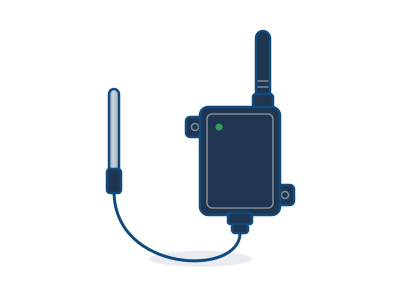
Product-zone temperature (HACCP record)

Sound familiar? “A cooler can drift for hours before anyone checks it.”

Sensors
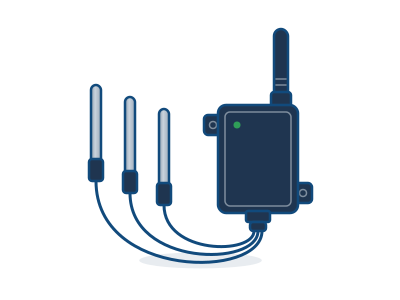
Where it goesProbes at the warmest point of the room, found by a temperature map, at product level and not in the evaporator discharge; the transmitter outside the washdown zone. The three-probe node can map the room first.
How it mountsProbe leads through the wall or the door gasket; the transmitter on a wall.
How manyTwo probes per cold room to start
What it readsTemperature (°C), Class A PT100
What it catchesTemperature excursions; slow recovery after loading or defrost
What you getA continuous, time-stamped cold-chain record the auditor and the engineer both see
Pairs with
Add No. 25 to a plan →

Cold-room or dock door

Door open time

Sound familiar? “Somebody propped the freezer door open again.”

Sensor
Where it goesMagnet on the door and sensor on the frame, latch side, top corner, inside the 30 mm sensing gap.
How it mountsScrew, adhesive or strap; IP67.
How manyOne per door
What it readsOpen or closed and how long; temperature and humidity at the door
What it catchesDoors left open, warm air coming in, frost on the coils
What you getDoor-open time beside the room temperature it causes
Pairs with
Add No. 28 to a plan →

Ultra-low freezer (−80 °C) or cryogenic storage

Ultra-low temperature

Sensor
Where it goesProbe through the door gasket port or an access port into the storage space; the transmitter outside.
How it mountsWall transmitter on a 2 m lead.
How manyOne per freezer
What it readsTemperature (−196 to 150 °C)
What it catchesCompressor failure, door seal failure, liquid nitrogen running low
What you getRemote warning before samples warm
Add No. 26 to a plan →

Refrigeration rack (supermarket)

Power per rack

Sensor
Where it goesIn the rack’s electrical panel: a current transformer on each compressor circuit and on the rack feeder.
How it mountsDIN rail in the panel; an electrician installs.
How manyOne twelve-channel sub-meter per panel
What it readsCurrent, voltage, kW, kWh and power factor by circuit
What it catchesMotor or compressor problems; short cycling
What you getShows which rack or unit is driving the bill
Pairs with
Add No. 13 to a plan →

Refrigeration screw compressor (food plant)

Vibration

Sensor
Where it goesBoth rotor bearing ends, plus the motor bearings.
How it mountsStud mount is best; an epoxy pad where drilling isn’t allowed; a flat magnet on flat, bare steel only. Clean to bare metal and mark the axes. Install with the machine locked out unless the magnet can go on from outside the guard.
How manyOne per machine to start. Large or critical machines can take one at each main bearing; an engineer sets the count at the assessment.
What it readsVibration velocity (mm/s), acceleration and peak (g), kurtosis and crest factor; surface temperature (°C)
What it catchesImbalance, misalignment, looseness, bearing wear and lubrication problems
What you getEarly warning of a developing fault, so the repair is planned for downtime instead of forced by a stop
Pairs with
Add No. 05 to a plan →

Evaporator coil (cold room)

Coil pressure drop (frost)

Sensor
Where it goesTubes across the evaporator coil, air side.
How it mountsTubing through the coil housing; the sensor body outside the cold zone if it won’t tolerate the room.
How manyOne per evaporator
What it readsDifferential pressure
What it catchesFrost building up; defrost not clearing the coil
What you getDefrost on need, not on a timer
Pairs with
Add No. 23 to a plan →

Electric defrost heater

Heater current

Sensor
Where it goesA 250 A clamp on the defrost heater circuit in the panel.
How it mountsSplit-core; an electrician installs.
How manyOne per evaporator heater circuit
What it readsCurrent (A) and amp-hours, as defrost minutes
What it catchesOver-defrosting on a timer
What you getMeasures defrost energy without taking control of the refrigeration
Pairs with
Add No. 14 to a plan →

Placement and quantities are starting points from Cognituv’s install guidance. A Cognituv engineer confirms them for your site, and the product data sheet governs. Electrical and hazardous-area work follows the site’s own rules and permits.


All asset groups →Ask an engineer about your equipment →

Have an equipment list?

Upload it in the planner. It suggests what to measure on each asset and a gateway to carry it, and a Cognituv engineer confirms the plan.

Prefer to talk? Call 1-888-580-8738

Plan your system