

Switchgear, panels and electrical rooms: what to measure, and where it goes.
Whole-building load, branch-circuit energy, enclosure temperature and water in electrical rooms.


Main switchgear or service entrance
Whole-building load
Sound familiar? “We get one big bill and no idea where the energy goes.”
| Sensors | |
|---|---|
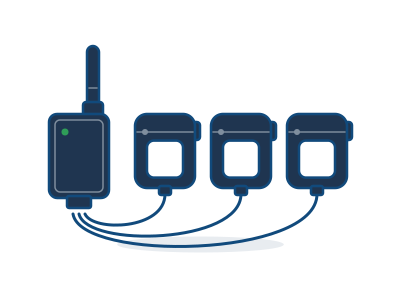
| Where it goes | A clamp around each service conductor, one per phase, at the switchgear or main feeder. |
| How it mounts | A qualified electrician installs under the site’s energized-work rules. |
| How many | Three per service, one per phase; No. 69 adds voltage and kWh |
| What it reads | True-RMS current, minimum and maximum, amp-hours (No. 46); voltage, power factor and kWh (No. 69) |
| What it catches | After-hours load, demand spikes |
| What you get | A load profile by hour, so after-hours and weekend load stands out |
| Pairs with |
Distribution panel
Branch-circuit energy
Sound familiar? “We can’t pull this line’s power out of the site bill.”
| Sensor | |
|---|---|
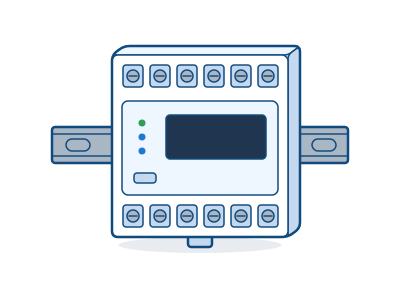
| Where it goes | The twelve-channel sub-meter on the DIN rail or wall inside the panel, with current transformers on the circuits that matter: HVAC units, lighting, process. |
| How it mounts | An electrician installs. Voltage inputs are 230 VAC three-phase plus neutral; check the panel voltage. |
| How many | One per panel (twelve channels) |
| What it reads | Current, voltage, kW, kVAR, kWh and power factor per channel |
| What it catches | Unexplained load by area or line |
| What you get | kWh by line or area, separate from the whole-site bill |
Motor control center (MCC) or switchgear
Surface temperature
| Sensors | |
|---|---|
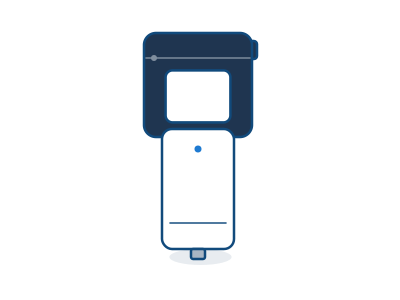
| Where it goes | An infrared sensor aimed at the connections or the enclosure’s hot spot, mounted clear of live parts; or a magnet-mount temperature and humidity sensor on the enclosure and in the room. |
| How it mounts | A qualified electrician installs; never inside live compartments without the site’s energized-work process. |
| How many | One per MCC section of concern |
| What it reads | Surface temperature; room temperature and humidity |
| What it catches | Loose connections, overheating, moisture in electrical rooms |
| What you get | A continuous trend between the annual thermographic scans |
| Pairs with |
Electrical or switchgear room
Water leak
| Sensor | |
|---|---|
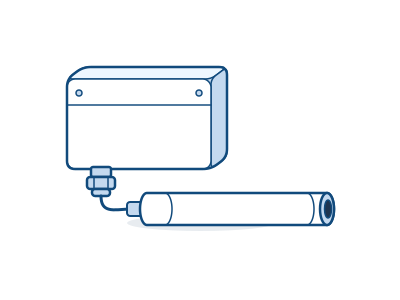
| Where it goes | Rope along the floor at the base of the switchgear line-up and under any pipes crossing the room. |
| How it mounts | Clips to the floor; node on the wall. |
| How many | One or two ropes per room |
| What it reads | Water along the rope |
| What it catches | Water reaching electrical gear |
| What you get | Catches water before it reaches the gear |
UPS or battery room
Room temperature and humidity
| Sensor | |
|---|---|
| Where it goes | Magnet or wall mount at battery height, away from the cooling supply. |
| How it mounts | Magnet. |
| How many | One per room |
| What it reads | Temperature and humidity |
| What it catches | Hot battery rooms, which shorten battery life |
Placement and quantities are starting points from Cognituv’s install guidance. A Cognituv engineer confirms them for your site, and the product data sheet governs. Electrical and hazardous-area work follows the site’s own rules and permits.
Have an equipment list?
Upload it in the planner. It suggests what to measure on each asset and a gateway to carry it, and a Cognituv engineer confirms the plan.
Prefer to talk? Call 1-888-580-8738