Motors, pumps, gearboxes and compressors: what to measure, and where it goes.

Where vibration and current sensors go on rotating machines, how they mount, and what changes in hazardous areas, on hot surfaces and near drives.

Electric motor

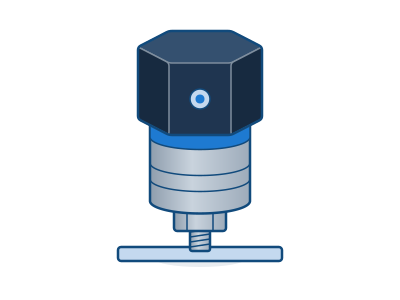
Motors over about 15 kWVibration and bearing temperature

Sound familiar? “The motor cooked itself and took the line down with it.”

Sensor
Where it goesDrive-end bearing horizontal, vertical and axial; non-drive-end bearing horizontal and vertical. If the fan cover hides the non-drive-end bearing, use the thickest, most rigid part of the end shield, square to the shaft.
How it mountsStud mount is best; an epoxy pad where drilling isn’t allowed; a flat magnet on flat, bare steel only. Clean to bare metal and mark the axes. Install with the machine locked out unless the magnet can go on from outside the guard.
How manyOne per machine to start. Large or critical machines can take one at each main bearing; an engineer sets the count at the assessment.
What it readsVibration velocity (mm/s), acceleration and peak (g), kurtosis and crest factor; surface temperature (°C)
What it catchesImbalance, misalignment, looseness, bearing wear and lubrication problems
What you getEarly warning of a developing fault, so the repair is planned for downtime instead of forced by a stop
Pairs with
Add No. 05 to a plan →

Current, phase balance and run hours

Sensors
Where it goesClamps on each phase inside the MCC bucket or starter; the radio mounted outside the enclosure.
How it mountsSplit-core; an electrician installs under the site’s energized-work rules.
How manyOne three-phase meter per motor
What it readsCurrent per phase (A), amp-hours and phase balance
What it catchesSingle-phasing, overload heating, a jam; run hours
What you getA load and run-hour record beside the vibration trend
Pairs with
Add No. 08 to a plan →

Gearbox

Vibration

Sensors
Where it goesInput-shaft and output-shaft bearing caps or housing flanges, all three axes at each; never on thin casing walls.
How it mountsStud or epoxy pad, to keep the high frequencies of gear mesh. Install with the machine locked out unless a magnet can go on from outside the guard.
How manyOne per machine to start. Large or critical machines can take one at each main bearing; an engineer sets the count at the assessment.
What it readsVibration velocity (mm/s), acceleration and peak (g), kurtosis and crest factor; surface temperature (°C); No. 55 adds a frequency spectrum
What it catchesGear tooth wear, bearing wear, misalignment
What you getEarly warning of a developing fault, so the repair is planned for downtime instead of forced by a stop
Pairs with
Add No. 05 to a plan →

Process pump (centrifugal)

Vibration

Sensor
Where it goesBearing housings only, never the volute: the inboard (thrust) bearing horizontal, vertical and axial; the outboard bearing horizontal and vertical; plus the coupling area.
How it mountsStud mount is best; an epoxy pad where drilling isn’t allowed; a flat magnet on flat, bare steel only. Clean to bare metal and mark the axes. Install with the machine locked out unless the magnet can go on from outside the guard.
How manyOne per machine to start. Large or critical machines can take one at each main bearing; an engineer sets the count at the assessment.
What it readsVibration velocity (mm/s), acceleration and peak (g), kurtosis and crest factor; surface temperature (°C)
What it catchesImbalance, misalignment, looseness, bearing wear and lubrication problems; cavitation, impeller imbalance
What you getEarly warning of a developing fault, so the repair is planned for downtime instead of forced by a stop
Pairs with
Add No. 05 to a plan →

Vertical pump

Vibration

Sensor
Where it goesMotor top bearing housing, in the direction of least structural stiffness (where the amplitude is highest).
How it mountsStud mount is best; an epoxy pad where drilling isn’t allowed; a flat magnet on flat, bare steel only. Clean to bare metal and mark the axes.
How manyOne per machine to start. Large or critical machines can take one at each main bearing; an engineer sets the count at the assessment.
What it readsVibration velocity (mm/s), acceleration and peak (g), kurtosis and crest factor; surface temperature (°C)
What it catchesImbalance, misalignment, looseness, bearing wear and lubrication problems; structural resonance
What you getEarly warning of a developing fault, so the repair is planned for downtime instead of forced by a stop
Add No. 05 to a plan →

Process fan or blower (belt-driven)

Vibration

Sensor
Where it goesMotor drive-end and non-drive-end bearings, plus the fan’s pillow-block bearings on the rigid bearing cap, horizontal and vertical; axial at the thrust bearing.
How it mountsStud mount is best; an epoxy pad where drilling isn’t allowed; a flat magnet on flat, bare steel only. Clean to bare metal and mark the axes. Install with the machine locked out unless the magnet can go on from outside the guard.
How manyOne per machine to start. Large or critical machines can take one at each main bearing; an engineer sets the count at the assessment.
What it readsVibration velocity (mm/s), acceleration and peak (g), kurtosis and crest factor; surface temperature (°C)
What it catchesImbalance, misalignment, looseness, bearing wear and lubrication problems; blade pitch, belt wear
What you getEarly warning of a developing fault, so the repair is planned for downtime instead of forced by a stop
Add No. 05 to a plan →

Reciprocating compressor

Vibration

Sensor
Where it goesOn the frame at the crankshaft main bearings and at the crosshead guides.
How it mountsStud mount is best; an epoxy pad where drilling isn’t allowed; a flat magnet on flat, bare steel only. Clean to bare metal and mark the axes. Install with the machine locked out unless the magnet can go on from outside the guard.
How manyOne per machine to start. Large or critical machines can take one at each main bearing; an engineer sets the count at the assessment.
What it readsVibration velocity (mm/s), acceleration and peak (g), kurtosis and crest factor; surface temperature (°C)
What it catchesBearing wear, valve faults, looseness, rod load problems
What you getEarly warning of a developing fault, so the repair is planned for downtime instead of forced by a stop
Add No. 05 to a plan →

Screw compressor (air or refrigeration)

Vibration

Sensor
Where it goesBoth rotor bearing ends of the airend, plus the motor bearings.
How it mountsStud mount is best; an epoxy pad where drilling isn’t allowed; a flat magnet on flat, bare steel only. Clean to bare metal and mark the axes. Install with the machine locked out unless the magnet can go on from outside the guard.
How manyOne per machine to start. Large or critical machines can take one at each main bearing; an engineer sets the count at the assessment.
What it readsVibration velocity (mm/s), acceleration and peak (g), kurtosis and crest factor; surface temperature (°C)
What it catchesRotor bearing wear, misalignment, looseness
What you getEarly warning of a developing fault, so the repair is planned for downtime instead of forced by a stop
Pairs with
Add No. 05 to a plan →

Rotating machine in a classified (hazardous) area

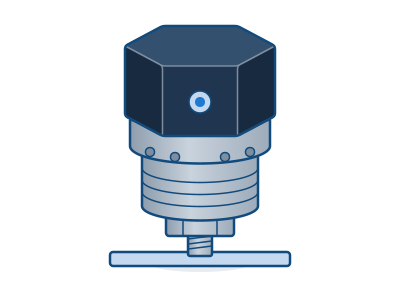
Vibration, explosion-proof

Sensor
Where it goesThe same bearing positions as for the machine type; only the explosion-proof node goes inside the classified zone.
How it mountsMagnet or stud. Work under the site’s hazardous-area permits and gas checks.
How manyAs for the machine type
What it readsVibration on three axes and surface temperature
What it catchesImbalance, misalignment, looseness, bearing wear and lubrication problems
What you getEarly warning of a developing fault, so the repair is planned for downtime instead of forced by a stop
Add No. 06 to a plan →

Rotating machine on a hot surface (above 80 °C)

Vibration with a thermal standoff

Sensor
Where it goesThe same bearing positions, with a heat-dissipating base or thermal standoff between the hot surface and the node.
How it mountsAbove 150 °C, install during a shutdown.
How manyAs for the machine type
What it readsAs for No. 05; the node is rated −20 to 80 °C ambient and reads surface temperature to 120 °C
What it catchesImbalance, misalignment, looseness, bearing wear and lubrication problems
What you getEarly warning of a developing fault, so the repair is planned for downtime instead of forced by a stop
Add No. 05 to a plan →

Motor on a variable-frequency drive

Vibration near drives

Sensor
Where it goesThe same bearing positions, on an insulated (resin) mounting pad, with any cable routed away from power conductors.
How it mountsResin pads, not rubber, so the mount stays rigid.
How manyAs for the machine type
What it readsVibration velocity (mm/s), acceleration and peak (g), kurtosis and crest factor; surface temperature (°C)
What it catchesImbalance, misalignment, looseness, bearing wear and lubrication problems
What you getEarly warning of a developing fault, so the repair is planned for downtime instead of forced by a stop
Add No. 05 to a plan →

Placement and quantities are starting points from Cognituv’s install guidance. A Cognituv engineer confirms them for your site, and the product data sheet governs. Electrical and hazardous-area work follows the site’s own rules and permits.


All asset groups →Ask an engineer about your equipment →

Have an equipment list?

Upload it in the planner. It suggests what to measure on each asset and a gateway to carry it, and a Cognituv engineer confirms the plan.

Prefer to talk? Call 1-888-580-8738

Plan your system