Central plant and water systems: what to measure, and where it goes.

Chillers, pumps, cooling towers, boilers and the risers between them: where each sensor goes and what it shows.

Chiller

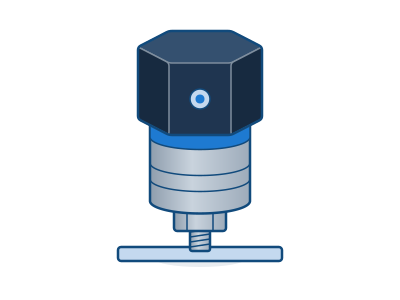
Compressor vibration

Sound familiar? “If the chiller goes down in July, we’re closing floors.”

Sensor
Where it goesOpen-drive chillers: motor drive-end and non-drive-end bearings plus the compressor bearing housings. Hermetic chillers: on the compressor housing over the bearings, on the rigid casting, not on panels or piping.
How it mountsStud mount is best; an epoxy pad where drilling isn’t allowed; a flat magnet on flat, bare steel only. Clean to bare metal and mark the axes. Check with the chiller’s service contractor before bonding anything to the unit (warranty).
How manyOne per machine to start. Large or critical machines can take one at each main bearing; an engineer sets the count at the assessment.
What it readsVibration velocity (mm/s), acceleration and peak (g), kurtosis and crest factor; surface temperature (°C)
What it catchesCompressor and motor bearing wear, looseness, surge-related vibration
What you getEarly warning of a developing fault on the chiller, so the repair is planned instead of forced
Add No. 05 to a plan →

Electrical power

Sound familiar? “Nobody can tell me what the plant costs to run.”

Sensors
Where it goesOn the chiller feeder at its disconnect or switchgear section.
How it mountsA qualified electrician installs under the site’s energized-work rules. Self-powered, so no separate supply.
How manyOne per chiller feeder
What it readsVoltage, current, power factor and kWh (No. 69); current per phase (No. 15 or No. 46)
What it catchesPower creeping up over time, short cycling, running after hours
What you getThe chiller’s power use on a time-stamped record, without touching its controls
Add No. 69 to a plan →

HVAC pump (chilled, condenser, hot water, booster)

Vibration

Sound familiar? “We don’t rebuild a pump until it seizes.”

Sensor
Where it goesPump bearing housings, never the volute: the inboard (thrust) bearing horizontal, vertical and axial; the outboard bearing horizontal and vertical. Motor bearings as for a motor. On vertical pumps, in the direction of least stiffness.
How it mountsStud mount is best; an epoxy pad where drilling isn’t allowed; a flat magnet on flat, bare steel only. Clean to bare metal and mark the axes. Install with the machine locked out unless the magnet can go on from outside the guard.
How manyOne per machine to start. Large or critical machines can take one at each main bearing; an engineer sets the count at the assessment.
What it readsVibration velocity (mm/s), acceleration and peak (g), kurtosis and crest factor; surface temperature (°C)
What it catchesImbalance, misalignment, looseness, bearing wear and lubrication problems; cavitation
What you getEarly warning of a developing fault, so the repair is planned for downtime instead of forced by a stop
Pairs with
Add No. 05 to a plan →

Cooling tower

Basin water chemistry (pH, ORP, conductivity)

Sound familiar? “I’m pretty sure we’re paying for water and chemicals we don’t need.”

Sensors
Where it goesElectrodes submerged in moving basin water, away from the make-up inlet and the chemical injection point, or in a side-stream flow cell off the recirculation line.
How it mountsProbe on its cable from a bracket on the basin wall; node on the tower structure or a post.
How manyOne pH or ORP probe and one conductivity probe per basin, or one converter with up to three probes
What it readspH; ORP (mV); conductivity (µS/cm); water temperature
What it catchesA treatment program drifting; over- or under-blowdown; biocide not holding
What you getBlowdown run on measured conductivity instead of a timer, with a record of the water program
Pairs with
Add No. 169 to a plan →

Make-up water flow

Sensors
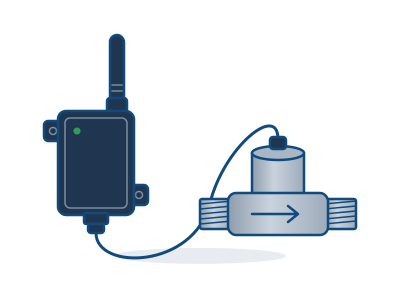
Where it goesIn-line on the make-up water line if it is 1 in. (DN25) or smaller; otherwise a pulse counter on the existing make-up meter.
How it mountsIn-line fitting (G 1-in. thread, not NPT), fitted during a planned stop.
How manyOne per tower
What it readsFlow (L/min) and total volume
What it catchesA stuck fill valve, overflow, leaks
What you getWater use by tower, and cycles of concentration with the blowdown meter
Pairs with
Add No. 19 to a plan →

Fan motor and gearbox vibration

Sound familiar? “The tower fan shook itself apart before anyone caught it.”

Sensors
Where it goesMotor bearings outside the plenum; gearbox input and output bearing caps inside the plenum. Inside the plenum is wet, rotating and confined: work under lockout and the site’s entry rules.
How it mountsStud mount is best; an epoxy pad where drilling isn’t allowed; a flat magnet on flat, bare steel only. Clean to bare metal and mark the axes. Stud or epoxy on the gearbox, to keep the gear-mesh frequencies.
How manyOne on the motor and one on the gearbox to start; No. 53, a vibration switch, gives a simple trip-style alert
What it readsVibration velocity (mm/s), acceleration and peak (g), kurtosis and crest factor; surface temperature (°C)
What it catchesGearbox wear, drive-shaft misalignment, fan blade imbalance, motor bearing wear
What you getEarly warning of a developing fault, so the repair is planned for downtime instead of forced by a stop
Pairs with
Add No. 05 to a plan →

Structure tilt

Sensor
Where it goesBolted to a main column or the fan deck frame.
How it mountsBolt or adhesive.
How manyOne per tower, where structure is a concern
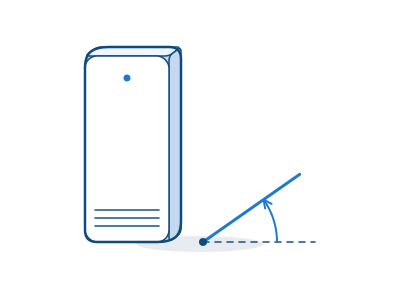
What it readsTilt angle on three axes; movement events
What it catchesSettling or structural movement
What you getEarly notice of movement on a wet, vibrating structure
Add No. 24 to a plan →

Boiler or water heater

Gas use

Sensors
Where it goesA pulse counter on the gas meter’s pulse or dry-contact output.
How it mountsBeside the meter; no gas work.
How manyOne per meter
What it readsPulse count, as volume
What it catchesBurners running when they shouldn’t
What you getA time-stamped gas record by meter
Add No. 16 to a plan →

Domestic hot water system

Water temperatures at control points

Sensors
Where it goesAt the heater outlet, the recirculation return before the heater and the mixing-valve outlet: strapped on under the insulation or in a thermowell.
How it mountsStrap-on probes under the insulation, or probes in existing thermowells.
How manyOne three-probe node per heater
What it readsWater temperature (°C)
What it catchesReturn temperature falling into the bacterial growth range; a failed mixing valve
What you getA record of the temperatures your water management program sets as control limits
Add No. 82 to a plan →

Pipe chase, riser or ceiling plenum

Leak along a run

Sound familiar? “Water went through three floors before anyone noticed.”

Sensors
Where it goesThe sensing rope laid where water will actually run: along the low side of the run, under joints and valves, at the floor-wall line where water pools. Not draped loosely or above the pipe.
How it mountsClips every 0.5 to 1 m so the rope touches the floor; node on the wall.
How manyOne rope per zone; ropes extend for longer runs
What it readsWater anywhere along the rope
What it catchesPipe, valve and fitting leaks
What you getCatches a leak before it spreads to the floors below
Add No. 33 to a plan →

Sprinkler riser or fire-pump room

Leak and room temperature

Sensors
Where it goesRope on the floor around the riser base; temperature and humidity on the wall away from the door.
How it mountsClips for the rope; magnet or screw for the room sensor.
How manyOne rope and one temperature sensor per room
What it readsWater; temperature; humidity
What it catchesRiser leaks; a room cold enough to freeze the riser
What you getEarly warning in a room nobody visits
Add No. 33 to a plan →

Placement and quantities are starting points from Cognituv’s install guidance. A Cognituv engineer confirms them for your site, and the product data sheet governs. Electrical and hazardous-area work follows the site’s own rules and permits.


All asset groups →Ask an engineer about your equipment →

Have an equipment list?

Upload it in the planner. It suggests what to measure on each asset and a gateway to carry it, and a Cognituv engineer confirms the plan.

Prefer to talk? Call 1-888-580-8738

Plan your system