

Rotating equipment & heat · No. 12
Three-probe temperature node
CGUV-TEMP-DRAG-004
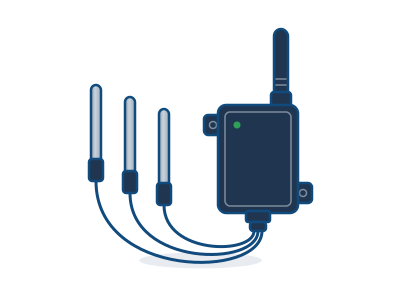
One outdoor-rated node with three probes, used for the floor, middle and ceiling of a cold room, three oven zones or three tanks.
- 3 probes
- −55 to 125 °C
- IP66
- 5-yr battery
Specifications
At a glance.
| Measures | Temperature on three probes |
|---|---|
| Range | −55 to 125 °C; ±0.5 °C typical |
| Mount | Wall or pole; 1.5 m probe leads |
| Rating | IP66 |
| Power | Battery, about 5 years |
| SKU | CGUV-TEMP-DRAG-004 |
Confirm site suitability, calibration and current product specifications before ordering. The product data sheet governs.
Request the data sheet →Where it fits
Typical places for the three-probe temperature node.
Food & beverage
Three coolers or three chill-tank zones on one node
General manufacturing
Three oven zones; three tanks
Automotive
Three oven zones
Warehousing & distribution
Floor, middle and ceiling of one room; freezer mapping
Recommended for
More in rotating equipment & heat
All rotating equipment & heat →Rotating equipment & heat
Vibration & temperature monitor
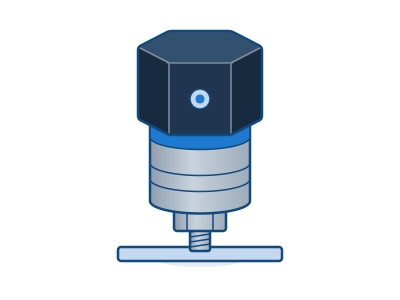
CGUV-STRUC-AVAN-001Three-axis vibration and surface temperature with on-board condition analytics, mounted by magnet or stud on the bearing housing. Trending vibration and temperature shows bearing wear before it causes a failure.3-axis · ±16 gVelocity RMS · kurtosis · crestIP66Specs and usesRotating equipment & heat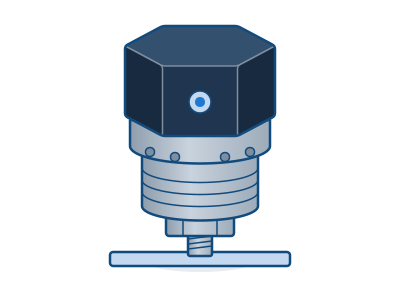
Explosion-proof vibration monitor
CGUV-STRUC-AVAN-002The same three-axis vibration and temperature sensor, certified for hazardous locations. Use it in classified areas such as flour, feed, carbon-black and solvent handling, and use No. 5 elsewhere.ATEX / IECExZone 0 / 1 / 2±16 gSpecs and usesRotating equipment & heat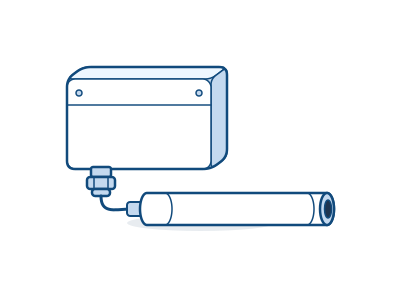
Infrared surface-temperature sensor
CGUV-TEMP-DECL-001Non-contact infrared measurement of surfaces up to 1030 °C, including bearing housings, oven and kiln shells, dryer drums, compressor heads, and the lugs and breakers in a motor control center.−40 to 1030 °CNon-contactIP67Specs and usesPut the three-probe temperature node to work.
The planner builds a gateway and sensor schedule around the problem you want to see. A Cognituv engineer confirms placement and coverage, then sends a quote.