

Is UV-C safe for workers?
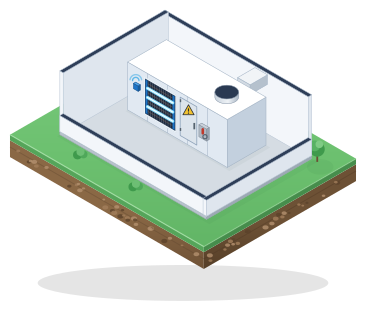
UV-C is safe for workers when people are kept out of the direct light. Cognituv’s air-handler, duct and water units put the lamps inside the equipment, so people nearby aren’t exposed during normal operation. The exposure risk comes during service, and it is controlled by switching the lamps off and following lockout before the unit is opened.
Upper-room fixtures are the exception, because they run in occupied rooms. They are designed so the light stays above head height, following NIOSH guidance on upper-room UVGI. See upper-air UV-C.
What is the exposure limit for 254 nm UV-C?
The ACGIH threshold limit value for 254 nm ultraviolet light is 6 mJ/cm² over an 8-hour day, as a time-weighted average (U.S. Department of Energy summary). Overexposure causes photokeratitis, a painful inflammation of the eye often compared to welder’s flash, and reddening of the skin. Both are usually temporary.
For fixtures in occupied rooms, a qualified person checks the light reaching the occupied zone with a calibrated radiometer. For units inside equipment, the check is that no light leaves the unit while it runs.
Does UV-C produce ozone?
Some UV lamps also emit at 185 nm, which turns oxygen into ozone. Lamps with quartz that blocks 185 nm are sold as ozone-free. Cognituv Grid, DUCT modules, ICE fixtures and in-room purifiers use 254 nm lamps specified ozone-free; check the spec sheet for any other product.
That matters to EHS because ozone is a regulated air contaminant: the OSHA permissible exposure limit is 0.1 ppm as an 8-hour average. If you want to confirm it in a space, Cognituv Connect offers an air quality monitor with an ozone channel.
What happens if a UV-C lamp breaks?
Most germicidal lamps are low-pressure mercury lamps. A break releases glass and a small amount of mercury. Handle it under your spill and broken-lamp procedure, with the unit off and ventilated.
In food areas, and anywhere a break could reach product, specify coated or sleeved lamps so the glass stays contained.
How should spent UV-C lamps be disposed of?
Under the EPA’s universal waste rule, 40 CFR 273, a lamp is defined broadly enough to include lamps that produce ultraviolet energy. Mercury-containing lamps from businesses are typically managed as universal waste, the same route as fluorescent tubes. Some states set stricter rules, so check yours.
Plan lamp changes from run hours and measured output. Cognituv Grid lamps are rated for 16,000 to 18,000 hours, depending on the environment and how they’re used, and a UV-C sensor shows output in Cognituv Connect between changes.
UV-C safety checklist for an EHS review
- Map where the lamps are, and confirm whether any light can reach an occupied area.
- Check every access door and panel. Identify how the lamps are switched off before entry.
- Add the UV-C to the unit’s lockout/tagout procedure under 29 CFR 1910.147.
- Label access points with a UV-C warning.
- Confirm the lamps are ozone-free (254 nm only).
- Set the broken-lamp cleanup and disposal route under universal waste rules.
- Train service staff. If work with lamps on can’t be avoided, use eye and skin protection rated for UV.
- Keep lamp output and maintenance records with the unit’s file.
Registrations
- Produced in an EPA-registered establishment (EPA Device Producer #100510-TX-1).
- Manufactured in an FDA-registered facility (FDA Manufacturer Registration #3016750569).
Frequently asked questions
Can people work in the area while UV-C runs?
Yes, for lamps inside air handlers, ducts and water vessels, because the light stays inside the equipment. Upper-room fixtures are designed for occupied rooms. Open fixtures over conveyors or in cold rooms need a layout review: shielding, mounting position and controls decide whether people can work nearby while the lamps run.
What is the UV-C exposure limit?
The ACGIH threshold limit value at 254 nm is 6 mJ/cm² over an 8-hour day, as a time-weighted average.
Do Cognituv lamps produce ozone?
Cognituv Grid, DUCT modules, ICE fixtures and in-room purifiers use 254 nm lamps specified ozone-free. Check the spec sheet for any other product.
Are UV-C lamps hazardous waste?
Lamps that contain mercury are typically managed as universal waste under 40 CFR 273, the same as fluorescent lamps. State rules can be stricter.
Does UV-C need its own lockout procedure?
Add it to the lockout procedure for the unit it sits in. The lamps are switched off and locked out with the fan before anyone opens the unit.
Specifications subject to change without notice. The current Cognituv catalog governs. Updated November 5, 2026.