

Room air treatment
Upper-Air & In-Room UV-C: Treat the air while the room is in use.
Upper-room UV-C fixtures and sealed in-room purifiers treat air continuously in occupied spaces such as waiting rooms, clinics, classrooms, corridors and offices, with no ductwork to change.
The problem and our answer
The problem
Some rooms carry more risk than the building system can handle: crowded waiting areas, exam rooms, classrooms, spaces with little outside air. Reworking ductwork isn’t practical, and a fan that only moves air around changes little.
Our answer
Upper-room fixtures create a treatment zone above head height, and normal air movement carries room air through it. Where a wall, ceiling or rolling unit fits better, sealed purifiers draw air through an enclosed UV-C chamber with photocatalytic media and return it treated.
Why it matters
What Upper-Air & In-Room UV-C does for you.
Runs while people are there
Upper-room reflectors keep UV-C above the occupied zone. In-room purifiers keep the lamps fully enclosed.
No construction
Wall, ceiling, floor-stand and mobile options. Most installs need only power.
Odors and VOCs too
In-room units pair UV-C with PCOR photocatalytic media aimed at odors and VOCs, with no filter changes on most models.
Checked, then watched
Upper-room installs are checked with a radiometer at commissioning, and Cognituv Connect air-quality sensors keep reporting after that.
Where it goes
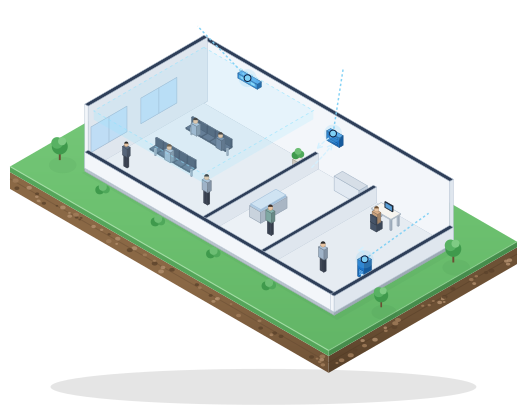
Above head height, or sealed in a unit.
Upper-room fixtures go high on the wall and keep UV-C above the occupied zone. Sealed purifiers go on a wall or the floor, with their lamps fully enclosed.
Choose by room
Which one do I need?
- Smaller rooms with wall space above head heightMASS 40
- Larger roomsMASS 90
- Corridors, waiting areas and open plan where wall space is takenCeiling MASS
MASS 40
Low-profile upper-room fixture for smaller rooms, wall-mounted above head height.
MASS 90
Upper-room fixture with more output for larger rooms.
Ceiling MASS
Ceiling-mounted upper-room treatment for corridors, waiting areas and open-plan spaces where wall space is taken.
FAN XS
Compact sealed purifier for exam rooms, small offices and waiting areas. Wall, ceiling or floor stand.
FAN M2
Wall-mount or rolling purifier with VOC and odor reduction for clinics, classrooms and offices.
FAN S and M
Free-standing purifiers that move to wherever demand is highest.
Identify · Apply · Verify™
How it works with Cognituv.
Identify
Room sensors for CO₂, particulates and VOCs show which spaces need treatment and when they’re busiest.
Apply
Upper-room fixtures or sealed purifiers sized to each room and placed for air movement and occupant safety.
Verify
Radiometer checks at commissioning, then Cognituv Connect keeps logging air quality and run time.
The evidence
How you’ll know it works.
Published guidance
NIOSH publishes guidelines for designing, installing and maintaining upper-room UV-C in healthcare settings, while keeping UV levels in the occupied part of the room within exposure limits.
NIOSH 2009-105 →Checked at commissioning
Upper-room installs are checked with a radiometer at commissioning, so the treatment zone is where it should be.
How it works with Cognituv →In your own rooms
Cognituv Connect air-quality sensors keep logging CO₂, particulates, VOCs and run time after commissioning, measured against a baseline agreed for your site.
Room air sensors →
Before you ask
Common questions about Upper-Air & In-Room UV-C.
- Does it run while the room is in use?
- It’s designed to. Upper-room fixtures keep UV-C above the occupied zone, and in-room purifiers keep their lamps fully enclosed.
- Does it need ductwork or construction?
- No. There are wall, ceiling, floor-stand and mobile options, and most installs need only power.
- Do the purifiers need filter changes?
- Most in-room models pair UV-C with PCOR photocatalytic media and need no filter changes. Lamps are changed on a schedule, or when Connect’s UV-C sensors show output has dropped.
- Upper-room fixture or sealed purifier?
- Upper-room fixtures mount on the wall or ceiling above head height and treat the air that room air movement carries through them. Sealed purifiers suit rooms where a wall, ceiling or rolling unit fits better, and they treat odors and VOCs too.
- How will we know it’s working?
- A radiometer check at commissioning, then Cognituv Connect logging air quality and run time from then on.
Is Upper-Air & In-Room UV-C right for your facility?
Start with a no-cost assessment: a call with an engineer and a written recommendation. We’ll size it to your equipment, or tell you what fits better.
Prefer to talk? Call 1-888-580-8738